
Polymer Conjugation Services
Advanced polymer conjugation technologies for drug delivery, polymer therapeutics and medical device applications. Explore functionalized polymers, PEGylation, polysarcosine, polyglutamic acid and next-generation bioconjugation platforms.
What Are Polymer Conjugates?
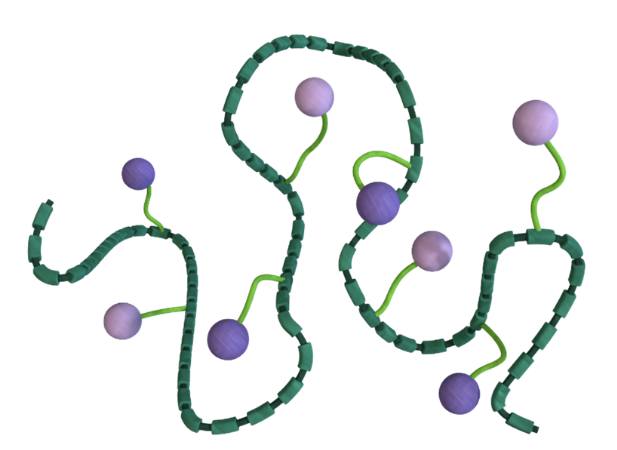
Polymer conjugates are systems in which a polymer is chemically linked to another molecule, such as a drug, protein, peptide, antibody, targeting ligand or surface. By combining the unique properties of polymers with biologically active compounds, polymer conjugation enables the development of materials and therapeutics with enhanced functionality and performance.
Depending on the intended application, polymer conjugates can be designed to perform a wide range of functions. In drug delivery, they can improve pharmacokinetics and reduce off-target toxicity. In protein therapeutics, they can enhance stability and extend circulation half-life. In medical devices and biomaterials, polymer conjugation can be used to modify surfaces, improve biocompatibility or introduce specific biological functions.
Today, polymer conjugation technologies are widely used in areas including polymer therapeutics, targeted drug delivery, gene therapy, RNA medicines, tissue engineering, regenerative medicine, biosensors and advanced medical devices.
As new therapeutic modalities continue to emerge, polymer conjugates are playing an increasingly important role in bridging chemistry, biology and materials science to create next-generation healthcare solutions.
Polymer can be conjugated to a wide variety of molecules:
Proteins
Enzymes, cytokines, growth factors
Peptides
Therapeutic peptides
Antibodies
Biologics and targeted therapies
Aptamers
Targeting ligands
Oligos
siRNA, mRNA, ASOs
Small Molecules
Drug payloads, HPAPIs, Antibiotics..
Biomaterials
Hydrogels, scaffolds
Medical Devices
Coatings, implants, sensors
Want to know more?
Polymer-drug conjugates (PDCs) are emerging as a powerful alternative to traditional delivery strategies, offering improved pharmacokinetics, enhanced targeting opportunities and reduced toxicity profiles.
Learn more about the technologies, applications and future potential of polymer conjugation in our latest article.
Benefits of Polymer Conjugation
Polymer conjugation has become a widely adopted strategy across pharmaceutical, biotechnology and medical device development. By combining polymers with therapeutic molecules, proteins, targeting ligands or biomaterial surfaces, it is possible to overcome many of the limitations associated with conventional therapies and materials.
The specific advantages depend on the polymer platform, conjugation chemistry and intended application, but several key benefits are consistently observed across polymer conjugate systems.
Improved Pharmacokinetics
Polymer conjugation can prolong circulation time and reduce rapid clearance, helping therapeutic molecules remain in the body for longer periods and increasing their potential effectiveness.
Enhanced Solubility
Many therapeutic compounds suffer from poor water solubility. Conjugation to hydrophilic polymers can improve formulation properties and facilitate administration
Increased Stability
Polymer conjugates can protect sensitive molecules from degradation during storage, circulation and delivery, helping preserve biological activity.
Reduced Toxicity
By modifying biodistribution and reducing off-target exposure, polymer conjugation can contribute to improved safety profiles and reduced systemic toxicity.
Targeted Delivery
Functionalized polymers can be combined with targeting ligands, antibodies or peptides to support active targeting strategies and more selective delivery.
Surface Functionalization and Biomaterials Engineering
Polymer conjugation enables the modification of biomaterial and medical device surfaces, improving biocompatibility, cell interactions and overall performance.

Types of Polymer Conjugates
Polymer conjugation encompasses a broad range of technologies and architectures designed to address different therapeutic, diagnostic and biomaterials challenges. The choice of polymer conjugate depends on the intended application, the molecule being modified and the desired biological outcome.
Today, polymer conjugates are used across drug delivery, protein engineering, tissue engineering, regenerative medicine and medical device development. While their structures can vary significantly, most systems can be grouped into several key categories.
Polymer Drug Conjugates (PDCs)
Polymer-drug conjugates consist of therapeutic payloads chemically linked to polymer backbones. These systems are designed to improve drug solubility, optimize pharmacokinetics, reduce toxicity and enhance therapeutic efficacy.
Polymer-drug conjugates have gained significant interest in oncology, inflammatory diseases and targeted drug delivery applications, where controlled biodistribution and improved safety profiles are critical.
Polymer-Ligand Conjugates
Polymer-ligand conjugates incorporate targeting moieties such as antibodies, peptides, aptamers or small molecules to enable selective interactions with specific cells, tissues or biological targets.
These systems are frequently used in targeted drug delivery, gene therapy and precision medicine applications.
Surface-Conjugated Polymers
Polymer conjugation is also widely used to modify the surface properties of biomaterials and medical devices. Surface-conjugated polymers can improve biocompatibility, reduce fouling, promote cell interactions or introduce bioactive functionalities.
Applications range from tissue engineering scaffolds and biosensors to wound care products and implantable medical devices.
Polymer-Protein Conjugates
Proteins, peptides and biologics can benefit significantly from polymer conjugation. By attaching hydrophilic polymers to protein therapeutics, developers can improve stability, prolong circulation half-life and reduce immunogenicity.
PEGylated proteins remain one of the most established examples, while alternative polymers such as polysarcosine and polyoxazolines are increasingly being explored for next-generation bioconjugates.
Functionalized Polymers
Functionalized polymers contain reactive groups that enable further modification and bioconjugation. Common chemistries include NHS esters, azides, DBCO groups and maleimides, which support the attachment of therapeutic payloads, proteins, targeting ligands and biomolecules.
These versatile platforms serve as the foundation for many advanced bioconjugation strategies.
Applications of Polymer Conjugates
Drug Delivery
Polymer conjugates can improve drug solubility, pharmacokinetics and biodistribution while enabling controlled release and targeted delivery strategies.
Tissue Engineering & Regenerative Medicine
Functionalized polymers and polymer conjugates are increasingly used to modify biomaterials, promote cell interactions and support tissue regeneration.
Protein and Antibody Engineering
Conjugation technologies are widely used to enhance protein stability, extend circulation half-life and optimize the performance of biologics and antibody-based therapeutics.
Medical Devices & Surface Functionalization
Polymer conjugation enables the development of bioactive coatings, anti-fouling surfaces and functional interfaces for next-generation medical devices.
Gene and RNA Therapies
Polymer conjugates can support the delivery, stabilization and targeting of nucleic acid therapeutics including mRNA, siRNA and oligonucleotide-based medicines.
Wound Care, Ophthalmology & Biosensors
Specialty polymers and conjugation technologies can be applied to advanced wound healing systems, ophthalmic devices and biosensor platforms requiring precise biological interactions.
Polymer Platforms & Bioconjugation Strategies
Common Polymers used in polymer conjugation
| Polymer Platform | Representative Examples | Main Benefit in Conjugation | Typical Applications |
|---|---|---|---|
| Stealth Polymers | PEG, PSAR, PAOx | Reduced protein adsorption, prolonged circulation, improved pharmacokinetics | Protein therapeutics, polymer-drug conjugates, RNA delivery |
| PEG-Based Systems & Copolymers | Functionalized PEGs, PEG copolymers, PEG-containing architectures | Proven clinical track record, versatile functionalization and tunable performance | Protein conjugation, nanoparticle shielding, targeted delivery systems |
| Biodegradable Polymers | PGA, Polyglutamic Acid | Controlled degradation, enhanced safety profile, drug release modulation | Drug delivery, regenerative medicine, tissue engineering |
| Polyamino Acid-Based Conjugation Platforms | Polylysine, Polyarginine, Polyornithine, PGA derivatives | Multiple conjugation sites, versatile functionalization and tunable biological interactions | Antibody conjugates, protein conjugates, drug delivery systems, biomaterials and advanced therapeutics |
| Next-Generation PEG Alternatives | PSAR, PAOx | Reduced immunogenicity, stealth behavior, repeat dosing potential | Biologics, protein conjugation, targeted therapeutics |
| Surface Functionalization Polymers | Functionalized PGA, PSAR derivatives, custom polymers | Surface modification, bioactive coatings, improved biocompatibility | Medical devices, biosensors, wound care, ophthalmology |
| Custom Polymer Architectures | Linear, branched, star, grafted polymers | Tunable physicochemical properties and application-specific optimization | Advanced therapeutics, targeted delivery, tissue engineering and medical devices |
Curapath supports a broad range of polymer platforms, from established technologies such as PEGylation and PEG-based copolymers to next-generation materials including p polysarcosine (PSAR), polyoxazolines (PAOx) and polyamino acid-based conjugation platforms. These technologies can be tailored to support applications ranging from protein and antibody conjugation to polymer-drug conjugates, biomaterials and advanced medical devices
Conjugation Chemistries
| Conjugation Chemistry | Typical Reactive Groups | Key Advantages | Typical Applications |
|---|---|---|---|
| Maleimide-Thiol Conjugation | Thiols (cysteine residues) | Highly selective, enables site-specific conjugation | Antibody conjugates, protein modification, targeted therapeutics |
| NHS Ester-Amine Coupling | Primary amines (lysine residues) | Simple, robust and widely used conjugation strategy | Protein conjugates, polymer-drug conjugates, biomaterials |
| DBCO-Azide (SPAAC) | Azides and strained alkynes | Copper-free click chemistry compatible with sensitive biomolecules | Bioconjugation, oligonucleotide conjugation, targeted delivery |
| Tetrazine-Norbornene Ligation | Tetrazines and norbornenes | Fast bioorthogonal reaction with excellent selectivity | Protein conjugation, aptamer conjugation, advanced therapeutics |
| Amide Bond Formation | Carboxyl and amine groups | Stable covalent linkage and broad compatibility | Drug conjugates, protein conjugates, medical devices |
| Hydrazone Linkages | Aldehydes and hydrazides | pH-responsive cleavage and controlled release potential | Drug delivery, stimuli-responsive systems |
| Oxime Ligation | Aldehydes and aminooxy groups | High stability and chemoselectivity | Protein modification, biomaterials, diagnostics |
| Custom Linker Strategies | Project-specific functional groups | Tailored performance, release profiles and targeting capabilities | Advanced therapeutics, medical devices and biomaterials |
The optimal conjugation chemistry depends on the polymer platform, target molecule and intended application. Curapath supports a wide range of conjugation strategies, from established amine and thiol coupling approaches to advanced bioorthogonal chemistries such as SPAAC and tetrazine ligation, enabling the development of highly customized polymer conjugates for therapeutic and medical device applications.
Polymer Conjugation Workflow
Successful polymer conjugation requires more than selecting a polymer and a linker. The development of robust polymer conjugates involves careful optimization of conjugation chemistry, purification strategies, analytical characterization and scalability considerations.
At Curapath, polymer conjugation projects are designed with downstream development and manufacturing in mind, supporting the transition from early-stage feasibility studies to clinical and commercial applications.
Conjugation Design
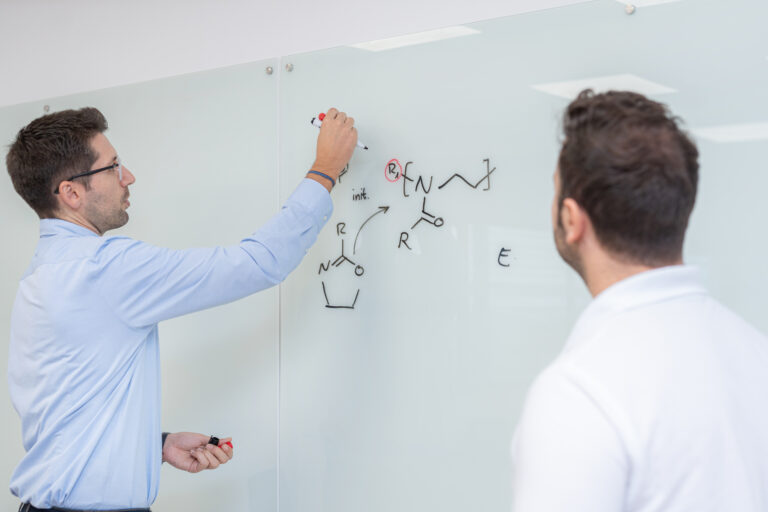
Selection of the most appropriate polymer platform, architecture and bioconjugation strategy based on the target molecule, intended application and product requirements.
Key considerations:
- Polymer selection
- Reactive functionalities
- Linker strategy
- Site-specific vs random conjugation
- Product performance objective
LNP Formulation
Clinical Development and GMP Manufacturing Services
Process Development & Optimization
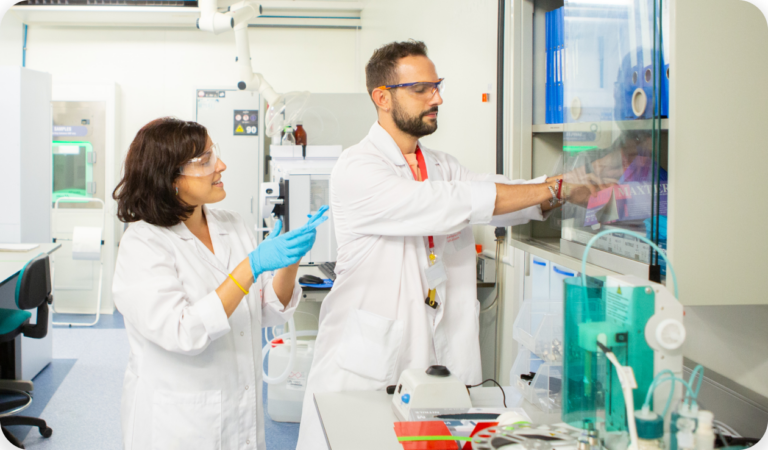
Optimization of reaction conditions to maximize conjugation efficiency while preserving the functionality of the target molecule.
Typical parameters:
- pH
- Temperature
- Reaction time
- Molar ratios
- Concentration
- Buffer conditions
Commercial supply of polymer and lipid excipients and nanoparticle formulations
Purification & Fractionation
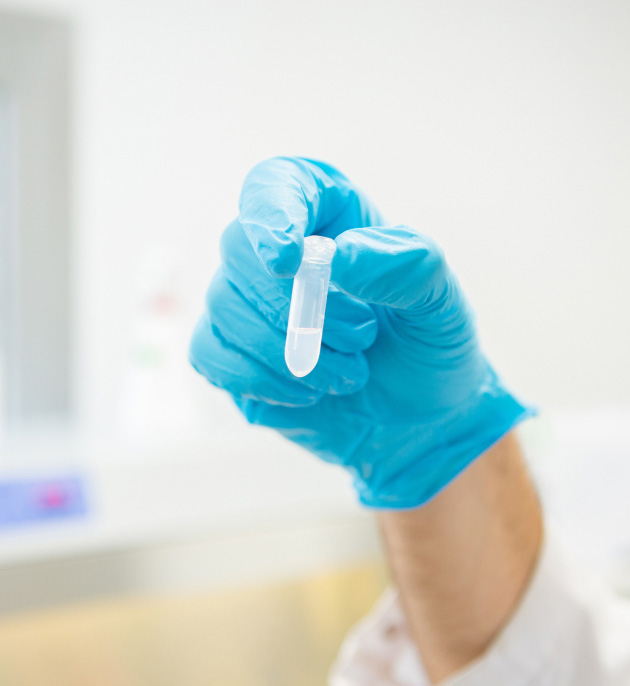
Removal of unconjugated species and process-related impurities using scalable purification approaches.
Common technologies include:
- Chromatography
- Tangential Flow Filtration (TFF)
- Ultrafiltration
- Dialysis
- Membrane-based separations
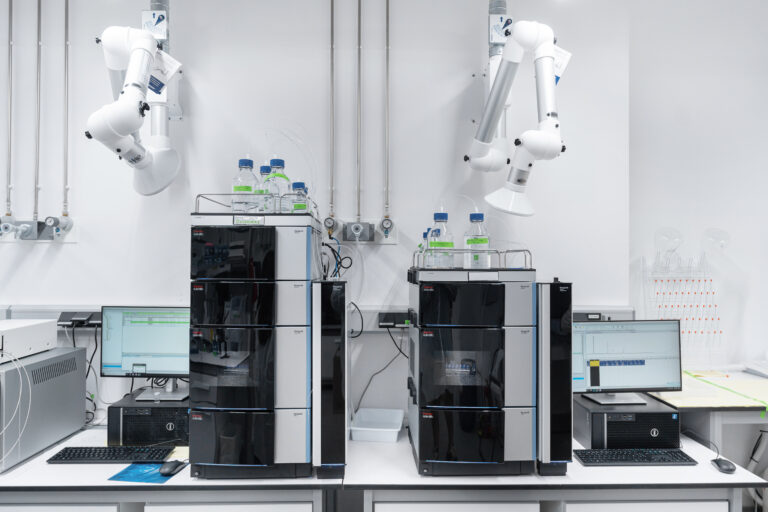
Analytical Characterization
Comprehensive characterization is essential to confirm conjugate identity, purity and performance.
Typical analytical techniques include:
- SEC
- HPLC
- DLS
- Electrophoresis
- UV-Vis
- FTIR
- Mass spectrometry
Scale-Up & Manufacturing
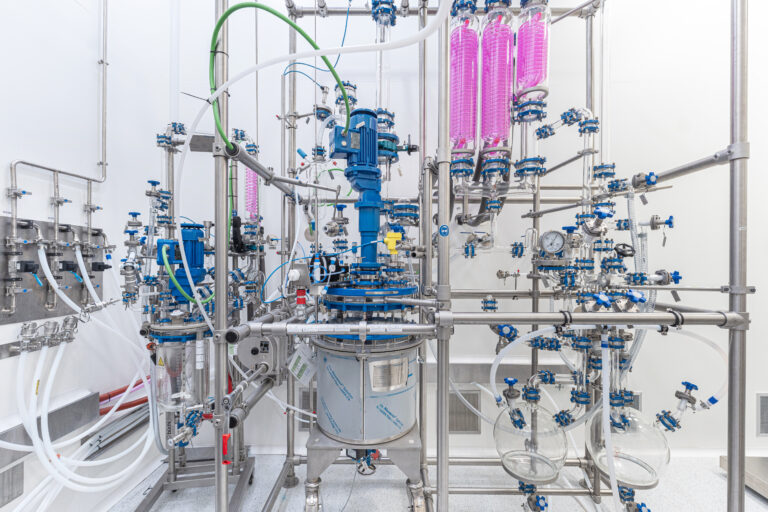
Development activities are performed with scalability in mind, facilitating technology transfer and manufacturing at larger scales.
Development objectives:
- Robust processes
- Reproducibility
- Manufacturability
- Regulatory readiness
- GMP compatibility
Polymer Conjugation Capabilities
Successful polymer conjugation projects require expertise spanning polymer design, polymer manufacturing, bioconjugation, analytical characterization and process development. Integrating these capabilities within a single development program can significantly accelerate the path from concept to application.
At Curapath, we support the development of polymer conjugates through a combination of specialty polymer expertise, bioconjugation know-how and manufacturing capabilities. Unlike many conjugation providers, our capabilities extend beyond conjugation itself to include the development and production of the polymer building blocks that form the foundation of advanced therapeutic and medical device technologies.
GMP Manufacturing of Specialty Polymers
Development and manufacturing of specialty polymers for therapeutic and medical device applications, including polyamino acids(PLL,PGA,PArg..), polysarcosine (PSAR), polyoxazolines (PAOx), PEG-copolimers and custom polymer architectures. Curapath supports projects from early-stage development through GMP manufacturing, providing a reliable foundation for advanced polymer conjugates and next-generation healthcare technologies.
Polymer
Functionalization
Development of functionalized polymer platforms incorporating reactive groups such as NHS esters, maleimides, azides and DBCO functionalities. These materials enable efficient bioconjugation, surface modification and the development of advanced polymer-based systems for therapeutic and medical device applications.
Custom Conjugation
Strategies
Design of tailored conjugation approaches for proteins, antibodies, peptides, aptamers, oligonucleotides and drug payloads. Conjugation strategies are selected and optimized according to the target molecule, desired functionality and application-specific requirements.
Analytical
Characterization
Comprehensive characterization of polymers and polymer conjugates using orthogonal analytical techniques to assess molecular weight, purity, functionalization, conjugation efficiency, aggregation profile and overall product quality throughout development.
Process Development &
Scale-Up
Optimization of conjugation and manufacturing processes to support reproducibility, scalability and technology transfer. Development activities are designed to facilitate progression from proof-of-concept studies to clinical and commercial manufacturing.
Therapeutics &
Medical Devices
Support for applications spanning drug delivery, biologics, gene therapies, tissue engineering, regenerative medicine, wound care, ophthalmology, biosensors and advanced medical devices requiring specialized polymer and conjugation technologies.
Ready to discuss a project?
Polymer Conjugates resources
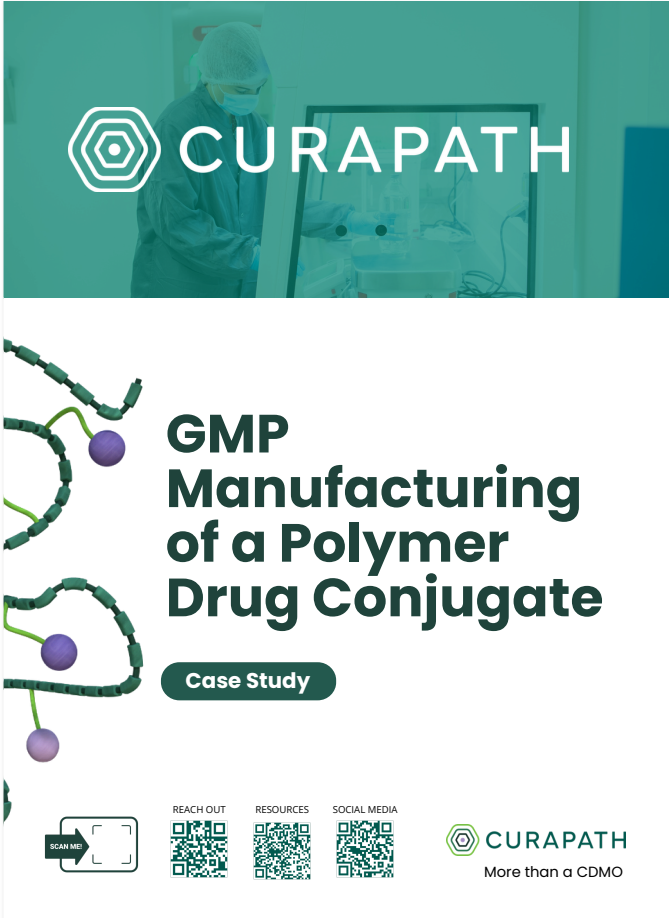
GMP
Manufacturing
of a Polymer
Drug Conjugate
Discover Curapath’s end‑to‑end GMP platform for polymer–drug conjugates, integrating robust CMC strategy, optimized conjugation and purification, rapid scale‑up to clinical batches, and full analytical and regulatory support to accelerate IND approval and clinical entry.
Coming soon
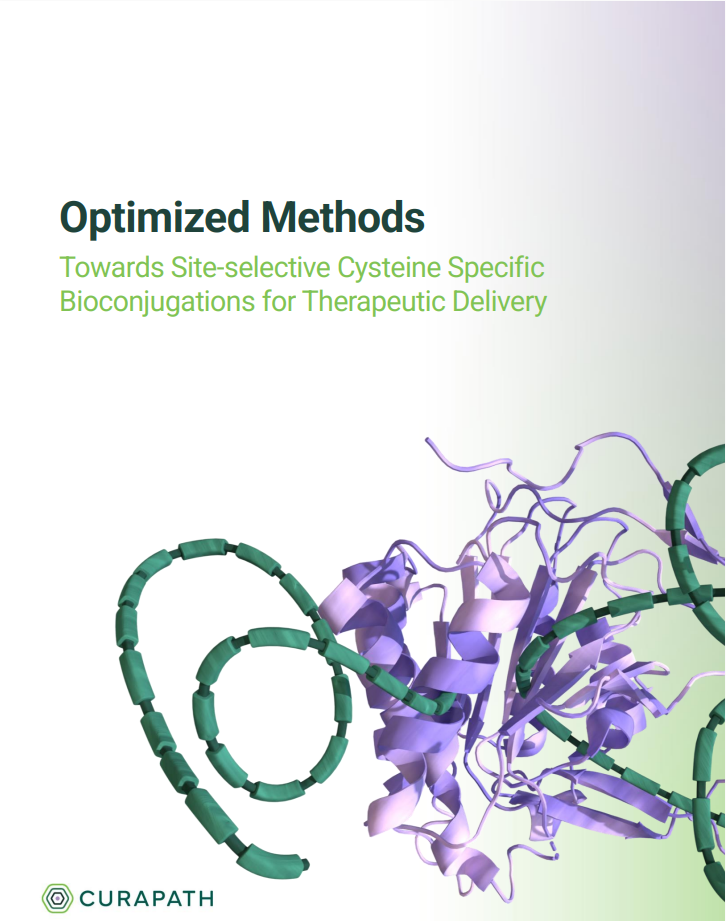
Cys Bioconjugation Brochure
Optimized Methods Towards Site-selective Cysteine Specific Bioconjugations for Therapeutic Delivery

CDMO Services
This leaflet outlines Curapath’s lipid- and polymer-based CDMO platform for advanced drug delivery, covering drug substance and drug product development, analytical services, GMP manufacturing, and sterile Fill & Finish capabilities.
Product Catalog
Explore a vast selection of components for you LNP formulations, from FTO ionizable lipids to PEG-FREE shielding lipids
Frequently Asked Questions
What factors determine the best polymer for a drug‑conjugate system?
Choosing the right polymer for a drug‑conjugate system depends on the drug’s physicochemical properties, desired release profile, administration route, and biocompatibility requirements. Key parameters such as hydrophilicity, degradability, molecular weight, and available functional groups directly influence conjugation efficiency and therapeutic performance, making polymer selection a critical step in formulation design.
How does polymer architecture influence drug‑delivery outcomes?
Polymer architecture, whether linear, branched, block‑copolymer, or star‑shaped, plays a major role in solubility, circulation time, drug‑loading capacity, and targeting behavior. By tuning architecture, developers can optimize pharmacokinetics and biodistribution, enabling more precise and effective drug‑delivery strategies.
What analytical methods are used to characterize polymer conjugates?
Characterizing polymer conjugates typically involves advanced analytical techniques such as SEC‑MALS, NMR, LC‑MS, HPLC, and FTIR. These methods confirm molecular weight, purity, conjugation efficiency, and structural integrity, ensuring reproducibility and regulatory compliance throughout development and manufacturing.
What advantages do synthetic polymers offer compared to natural polymers in conjugation?
Synthetic polymers offer superior control over molecular weight, architecture, and functionalization, enabling highly reproducible and customizable conjugates. While natural polymers provide biodegradability and inherent biocompatibility, they may introduce batch variability or limited chemical tunability, making synthetic options preferable for precision drug‑delivery applications.
What emerging polymer platforms are gaining traction in bioconjugation research?
Next‑generation polymer platforms such as polysarcosine, poly(2‑oxazoline)s, polyglutamates, and zwitterionic polymers are gaining momentum due to their tunable architectures, low immunogenicity, and enhanced biocompatibility. These materials are increasingly used as PEG alternatives and are shaping the future of targeted drug delivery and biologics engineering.
How do polymer conjugates influence the immunogenicity of biologics?
Polymer conjugates can significantly reduce the immunogenicity of biologics by creating a protective hydration layer that minimizes protein adsorption and antigen exposure. This “stealth effect” helps extend circulation time, improve tolerability, and support safer long‑term or repeat dosing regimens.
What challenges arise when scaling polymer conjugation processes for GMP manufacturing?
Scaling polymer conjugation to GMP production requires strict control over reaction conditions, purification processes, and analytical characterization to maintain batch consistency. Preserving polymer architecture, functionalization levels, and conjugation efficiency at larger volumes can be complex, making experienced CDMO support essential for clinical‑grade manufacturing.
