
Explore Curapath's lipid and polymer-based solutions for non-viral drug and gene delivery.
Non-Viral Gene Delivery
Curapath provides polymer- and lipid-based nanoparticle solutions for non-viral drug and gene delivery, supporting programs from formulation development and optimization to scale-up and GMP manufacturing.
Lipid Nanoparticles (LNP)
LNPs are nanoscale drug delivery systems used in the pharmaceutical industry to encapsulate and deliver different therapeutic agents. Over the last decade they have demonstrated outstanding efficacy in the delivery of nucleic acids such as DNA, mRNA, aptamer, siRNA, circular RNA and CRISPR payloads among others. Nowadays, this innovative technology is widely being employed for the development of new vaccines, enhancing cancer treatments and curing rare genetic diseases.
Ionizable Lipids
Shielding Lipids
Sterols
The presence of sterols confers structural integrity to the particle, enhancing its overall stability. Cholesterol is the most frequently used.
Helper Lipids
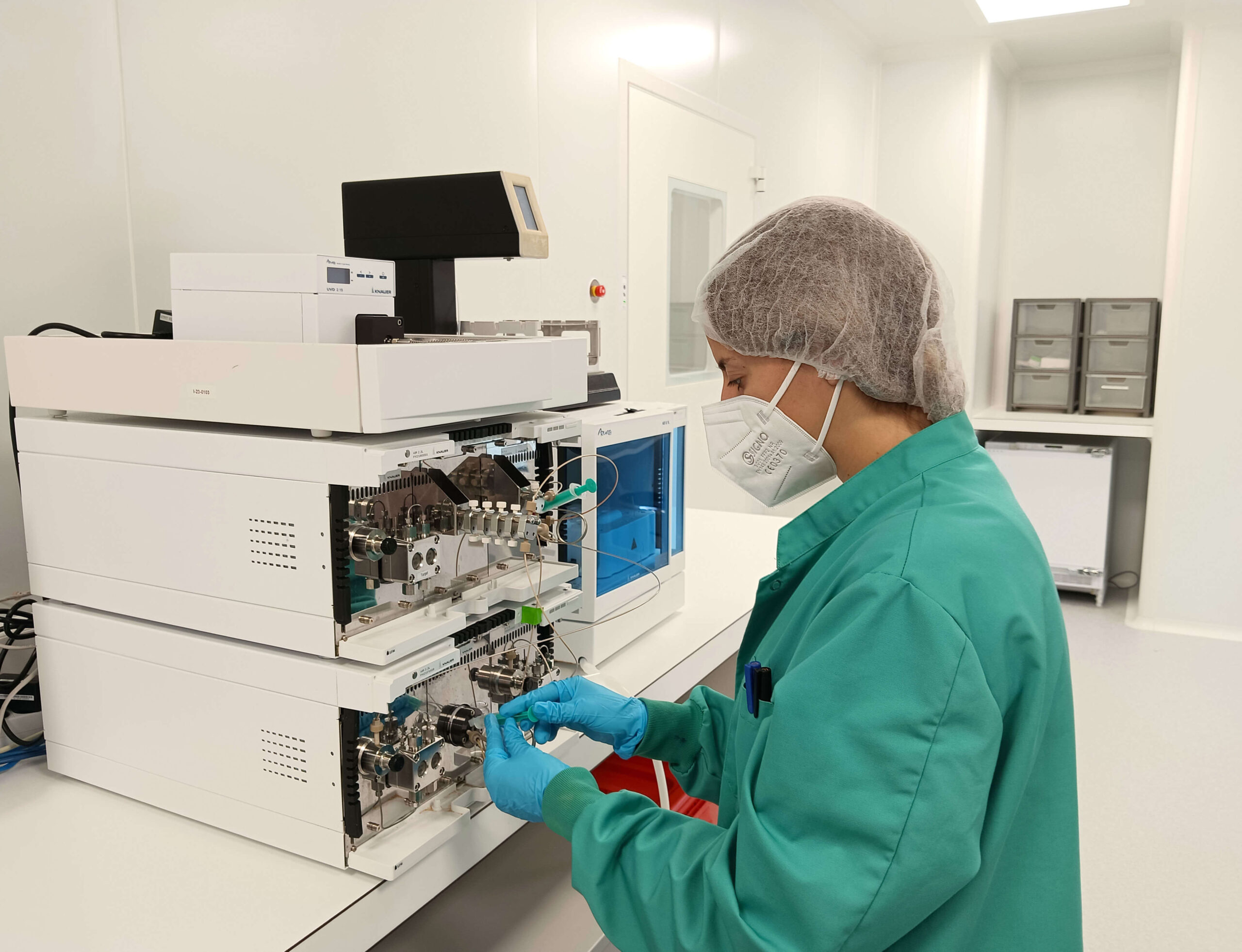
At Curapath, we excel in optimizing lipid nanoparticle (LNP) formulations to ensure superior performance and efficacy. Our comprehensive services encompass the entire manufacturing process, providing expert guidance from initial design to full-scale production. Utilizing advanced Design of Experiments (DoE) methodologies, we fine-tune the composition and process parameters of LNP formulations for optimal results.
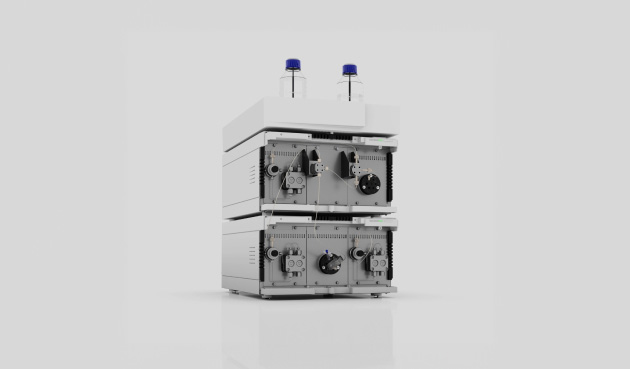
We employ various LNP manufacturing methods, including microfluidics and turbulent mixing (T-Mixing), capable of scaling from milliliters to multi-liter batches of lipid-encapsulated nucleic acids. Our GMP-certified facilities are equipped with the state-of-the-art KNAUER IJM production equipment, enabling the efficient production of large LNP batches to meet clinical and commercial demands. Additionally, we hold vast experience in seamless technology transfer and adaptation of alternative mixing technologies from customers, ensuring smooth transitions and maintaining quality.
Targeted LNPs
Active targeting equips LNPs with ligands that bind specific cellular receptors, allowing these nanoparticles to overcome their natural liver tropism and reach extrahepatic tissues, thereby enabling more precise engagement of defined cell populations; however, effective targeting depends not only on ligand selection but also on how these ligands are chemically attached and displayed on the LNP surface to maintain accessibility, stability, and biological function.
Active targeting in LNPs works by modifying how the nanoparticle behaves once it enters the body, relying on key surface components to stay functional in a complex biological environment. By displaying ligands in a controlled, hydrophilic orientation and attaching them through stable chemistries, the LNP reduces unwanted protein adsorption and keeps those ligands accessible for receptor recognition. These design features help the nanoparticle avoid being funneled back to the liver and remain “visible” to the intended target cells.
It also works through receptor‑mediated uptake, one of the central mechanisms of active targeting. When the ligand binds its matching receptor, the cell internalizes the LNP through a natural endocytic pathway, improving delivery efficiency compared with passive diffusion. The density of ligands on the surface further tunes how strongly and selectively the LNP engages its target, enabling precise delivery to specific cell subsets within complex tissues.
At Curapath, we specialize in advancing active targeting for LNPs by engineering surface chemistries that preserve nanoparticle integrity while enabling precise biological interactions. Our CliCr® platform, built on TMTHSI conjugation technology, is designed to overcome the limitations of conventional hydrophobic click reagents and ensure that ligands remain functional, accessible, and securely attached throughout in‑vivo circulation.
We leverage the intrinsic advantages of CliCr® hydrophilic conjugation to ensure efficient, stable ligand attachment while preserving nanoparticle quality. By minimizing steric hindrance and preventing aggregation, CliCr® maintains ligand accessibility and supports reliable receptor engagement. Unlike hydrophobic click chemistries, it sustains nanoparticle integrity across labeling levels, enabling robust, predictable in vivo targeting performance.
Polymer Nanoparticles (PNP)
Polymer nanoparticles (PNPs) are advanced drug delivery vehicles made primarily of polymer functional excipients. They have demonstrated effectiveness in delivering a wide range of therapeutic agents such as hormones, vitamins and larger entities such as oligonucleotides, nucleic acids, and proteins.
PNPs can be precisely engineered for specific size, shape, and stealth properties, enabling them to evade the body’s defense mechanisms and target particular cells and tissues. Their customizable loading capacity, versatility in delivering diverse payloads, and safe toxicity profiles make PNPs highly efficient for delivering various nucleic acids, regardless of their size and chemical nature.
The design of polymer components for non-viral gene delivery depends on the payload, site of action, and route of administration. Key functional excipients include ionizable and shielding polymers, which are essential for optimizing delivery and efficacy.
Ionizable Cationic Polymers
Ionizable and cationic polymers form stable complexes (polyplexes) with nucleic acids through electrostatic interactions, ensuring efficient intracellular delivery. Some examples of efficient complexing polymers are polyethyleneimine (PEI) and polybeta amino esters (PBAEs) among others. Curapath’s also offers proprietary ionizable, and cationic polymers based on polyamino acids which offer unique benefits, including enhanced stability, targeting specificity, and reduced toxicity, significantly improving the therapeutic profile of nucleic acid delivery systems.
Shielding Polymers
Nanoparticle formulation Services
We develop and optimize polymer nanoparticles, lipid nanoparticles (LNPs), PLGA-based delivery systems, and targeted nanoparticle formulations from early R&D and proof-of-concept studies through process development, scale-up, analytical characterization, and GMP manufacturing. Our team supports the complete formulation workflow, helping sponsors translate innovative drug delivery systems into robust, scalable, and regulatory-ready products for preclinical and clinical applications.
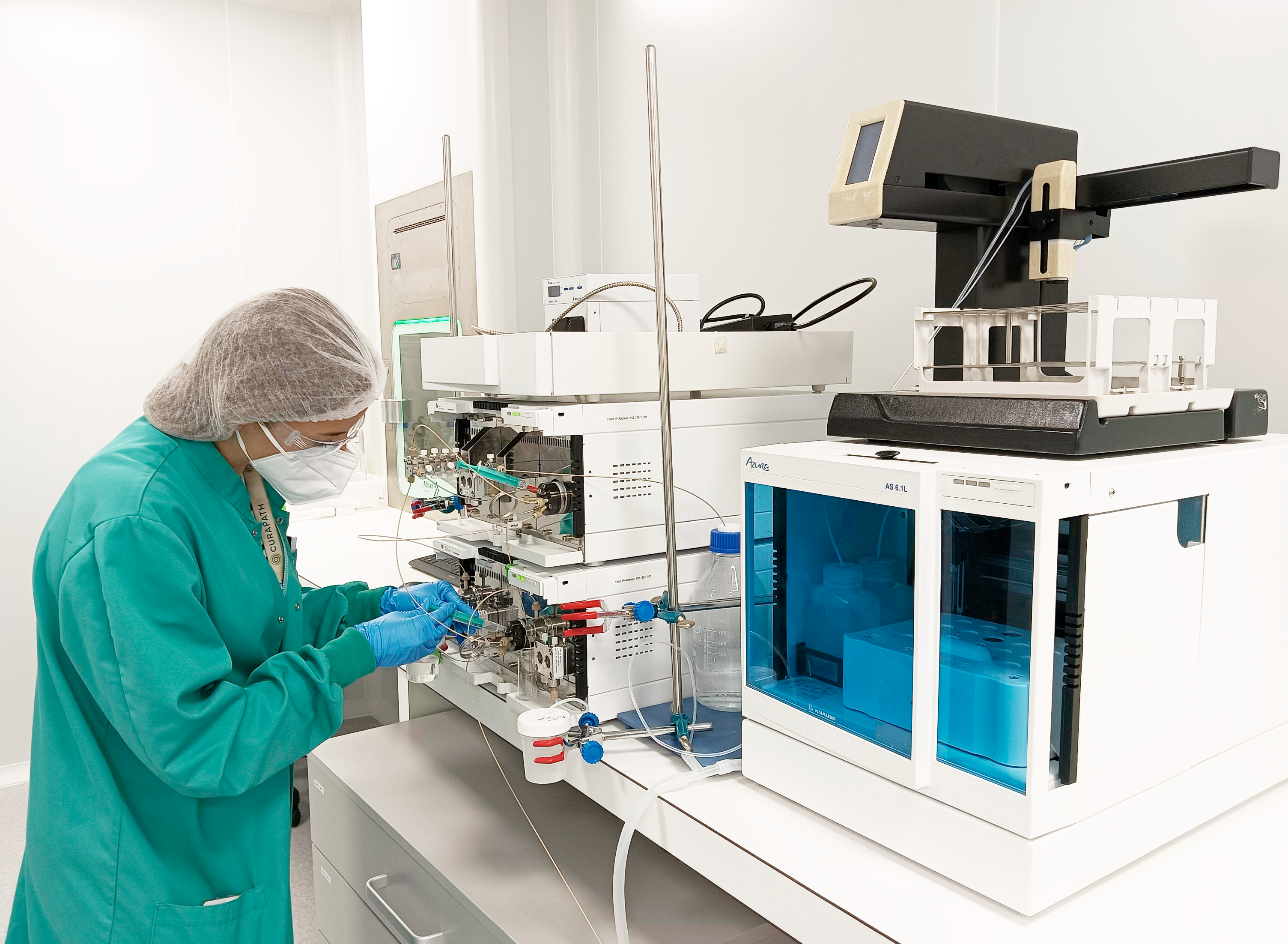
From R&D to GMP Manufacturing
Whether you are developing a polymer nanoparticle, lipid nanoparticle (LNP), PLGA-based delivery system, or targeted nanoparticle formulation, Curapath provides end-to-end development services. Our capabilities span formulation development, process optimization, analytical development, scale-up, technology transfer, GMP manufacturing, aseptic fill & finish, and CMC support, helping sponsors accelerate the journey from early R&D to clinical-ready products.